


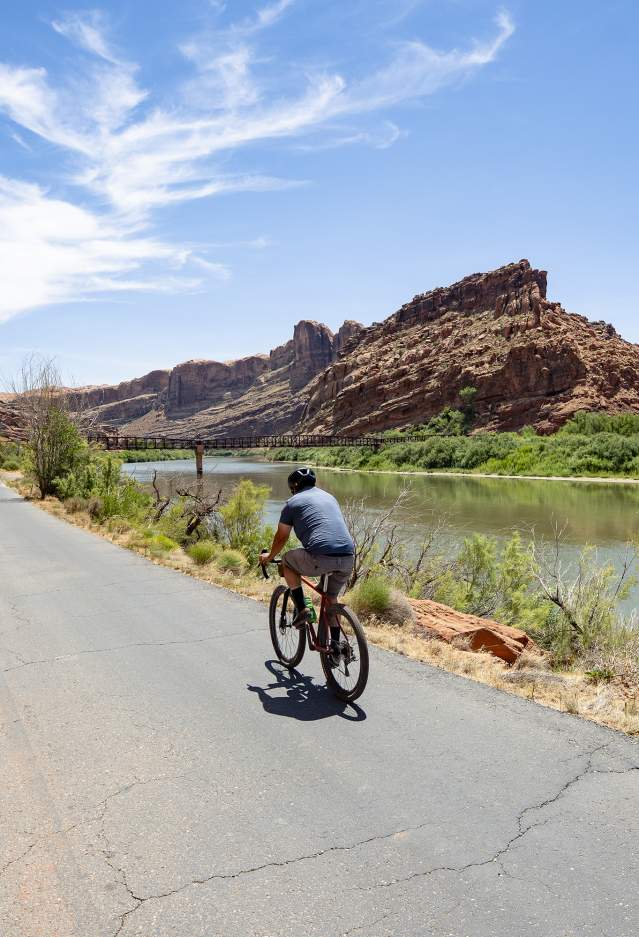
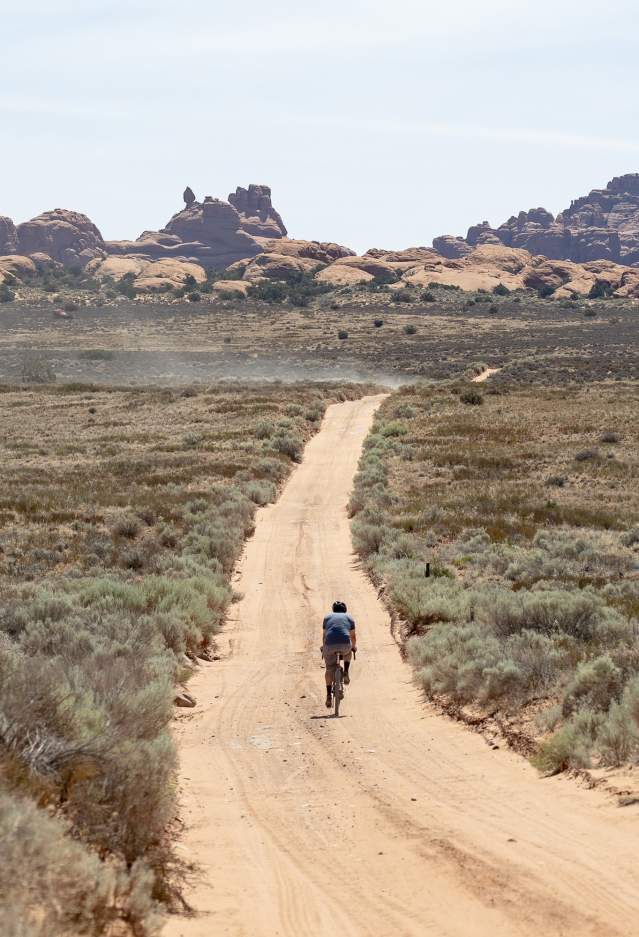
Moab, Utah, has been a hub for mountain bikers and offroaders for decades. Now, we’re inviting gravel bikers to explore its thousands of miles of trails and roads. This isn’t your average gravel experience—expect overland gravel roads with grit, amazing views, and a long history of exploration. You’ll want to run 47mm-50mm or 2.1+ wide tires on your bike—but what about Moab is ever average, anyway?
The Moab edition of the Gravel Adventure Field Guide encourages adventure cyclists of all skill levels to explore the layers of Moab, mile by mile. Pick up a free copy at a Moab bike shop when you're in town!
Seasons of Gravel Riding in Moab
Moab is a dynamic desert landscape, which makes it an ideal four-season gravel-bike destination. Winter brings quiet solitude on red-rock-lined dirt roads, while spring conjures a desert awakening of wildflowers and wildlife migration. Summer is the best time to view the Milky Way, and fall days are filled with perfect temperatures and golden desert light. Moab reveals a new personality every season—especially when seen from a bike.
Winter is best for your long rides, especially rides that overlap with pavement. While there isn’t as much daylight as in other seasons, Moab rarely sees temps cold enough to sabotage your adventure—and if the sun is shining, you’ll want a lighter layer to peel down to under your jacket. Fewer visitors also means quieter trails to yourself.
Spring is a popular season to be in Moab. Temps are gorgeous, the cacti are blooming, and local birds—including fearsome birds of prey—begin building their nests. During this season, you’ll want to break out your bikepacking gear to extend your time in the saddle and sleep under the stars.
In summer, plan to ride early in the day, so you can hop in your hotel pool (or take a guided river trip) in the afternoon. At night, enjoy the best views of the Milky Way all year. No sugarcoating the fact that summer in Moab is hot: It’s a desert, after all. June sees temps in the 90s, and in July and August, temperatures regularly spike above 100.
Fall is the golden desert season, bringing many visitors to Moab—for good reason. The cottonwoods along the Colorado River turn bright yellow, along with the aspens in the La Sal Mountains. This is a popular season to join a local bike event, including Outerbike, the Moab Ho Down Mountain Bike Festival, and the Skinny Tire Fall Festival. Plan a longer stay when you come in the fall, to leave room for more exploration.
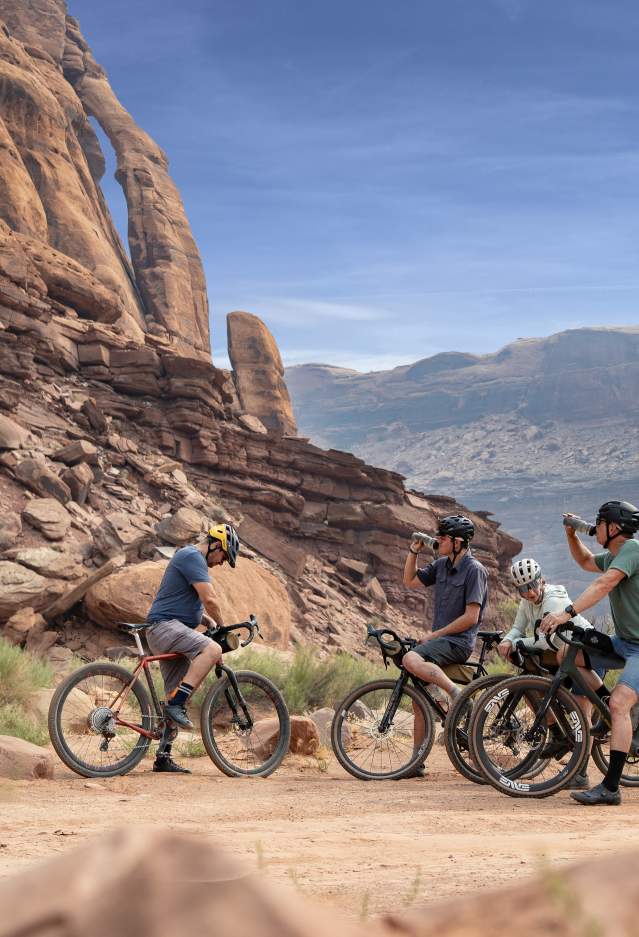
Planning and Preparation
reparation for a desert gravel adventure is essential. Planning minimizes encountering scenarios that require emergency assistance. Here are some things you can do:
Be prepared for temperature extremes. Have appropriate clothing layers. In winter, take insulating clothing for any unforeseen circumstances encountered during a ride. In summer, a lightweight long-sleeved shirt and cycling cap can help you stay cool. Carry sunglasses and sunscreen.
Carry lots of water. You can never have enough water in the desert. Bring as much as your bicycle can accommodate. A gallon per person a day is a good rule to follow. Electrolyte replacement is essential—use powdered or liquid electrolytes, or something salty.
Bring food—a great gravel adventure requires energy. Eating adequate food helps maintain energy levels throughout the ride. Salty food choices are good ones.
Share your gravel-ride plans with someone. Let them know how far and long you plan to ride, and when you expect to be back. Never deviate from the plan without informing them.
Know your gravel route. Research and download your planned route to your phone or head unit. Save them for offline use. Cell phone and/or GPS coverage vary across the desert. Carry this Moab Gravel Adventure Field Guide and a compass as backup. If you do become lost or disoriented, contact rescue services and stay where you are.
Know your fitness and skill levels. In the desert, rides of a certain distance can take longer than typical gravel rides. Even expert gravel cyclists will find Moab’s terrain challenging and unforgiving. Be honest in assessing your fitness and skill levels. Take a light. It never hurts to carry a headlamp or flashlight—and extra batteries—on a Moab gravel adventure. Do not attempt to ride at night without illumination: The consequences could be deadly.
Take a cell phone. Regardless of inconsistent cell service in the desert, cell phones have assisted Grand County Search and Rescue to save numerous lives. Leave with a fully charged phone, and then leave it off, or in airplane mode, unless necessary. If calling 911, your location is automatically located. Cell-phone signals work better on mesa tops versus down in the canyons.
Carry first aid and supplies. Bicycle accidents happen. Be prepared with a basic first-aid kit containing adhesive bandages in assorted sizes, antibiotic ointment, rolled gauze, medical tape, and the means to cleanse a wound. Shears, tweezers, pain relievers (ibuprofen/acetaminophen) can also be helpful.
Know the weather and the forecast before you ride. Pay attention to the day’s weather patterns. In summer months, ride during the cooler hours earlier or later in the day. Be mindful of lightning and thunder, especially during monsoon season (July through September). Avoid slot canyons and drainages during threats of thunderstorms. If you hear thunder, lightning is close enough to strike.
Ride with the right equipment. Surface conditions on Moab’s gravel and dirt roads can vary. Gravel rides here can include chunky gravel, loose rocks, slickrock, and sand. Overland and/or double-track jeep roads require comfort with the rugged offroad-riding experience. Tire size is important: We recommend 47mm / 2.1” or wider tires, with sealant. Use bike bags, on handlebars or frames, to carry ride supplies.
Know the local camping regulations. Only the developed campgrounds within 20 miles of Moab allow camping. Dispersed camping is allowed on select BLM lands outside Moab.