


Moab's canyon country is famous for what rises above the surface — the arches, the mesas, the red rock walls. But the same geology that built all of that also carved an entirely different world underneath it. Wind, water, and time have hollowed out grottos, caverns, and alcoves throughout the region, some hiding petroglyphs left by people who knew this place long before anyone named it Moab. This guide covers publicly accessible Moab caves, from a 12-minute roadside tour to a full backcountry day.
Easily Accessible Caves Near Moab
You don’t have to venture deep into the backcountry to experience some of Moab’s quirkiest and historic caverns. Whether you’re looking for a quick roadside stop or a scenic loop hike with some cowboy history, these caves let you discover a different side of Utah’s red rock landscape — no high-clearance vehicle or full-day expedition required.
Hole N’ The Rock
15 miles south of Moab along Highway 191, Hole N’ The Rock is a one-of-a-kind roadside attraction. This 5,000-square-foot home, with 14 rooms (yes, you read that right), was carved directly into the sandstone cliff by Albert and Gladys Christensen over 12 years, beginning in the 1940s. Today, guided tours take visitors through the remarkable home. Don’t miss the zoo! This cave is an easy, family-friendly stop that offers a fascinating glimpse into local history and creativity.
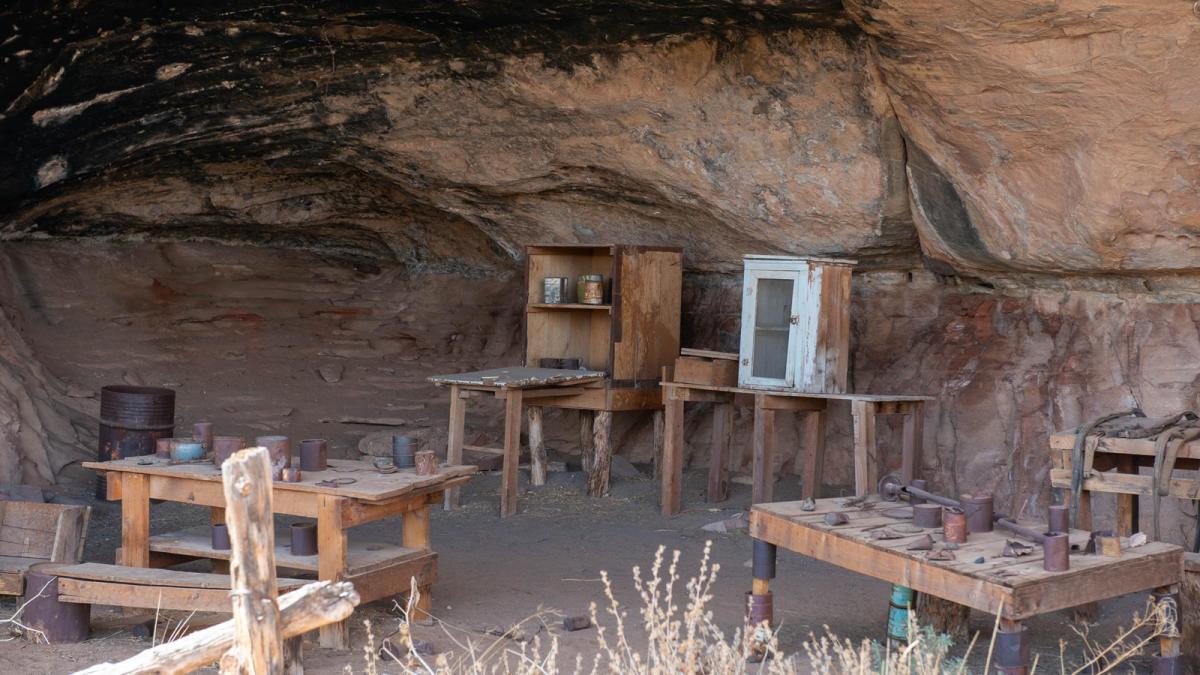
Cave Spring Trail, Canyonlands National Park
Located in the Needles district of Canyonlands National Park, Cave Spring Trail is a short 0.6-mile loop that packs history, scenery, and adventure into an easy, family-friendly hike. The drive from Moab takes about 90 minutes and winds through Indian Creek, passing the famous “Newspaper Rock” petroglyph panel before reaching the trailhead. Along the route, you’ll discover a natural spring, a historic cowboy camp, and painted handprints dating to around 1,000 AD. Two short wooden ladders lead to a slickrock overlook with panoramic views of the Needles. A Canyonlands National Park entrance fee is required, but no additional permit is needed for this rewarding hike. Remember that entering, touching, or climbing on archeological sites is strictly prohibited. View structures from a distance to protect fragile walls.
Adorned with a disco ball and vibrant paper streamers, Dos Más Café serves up the classics, plus lattes with flavor profiles like orange vanilla and miso caramel, and cooling refreshers. Shop their wide variety of gifts or treat yourself to a pastry.
Address: 35 E Center St, Moab, UT 84532
Moab Wind Caves
Ready for an off-roading adventure? If you’re looking to combine a memorable drive, rewarding hike, and unique sandstone formations, these Moab caves are well worth building a full day around.
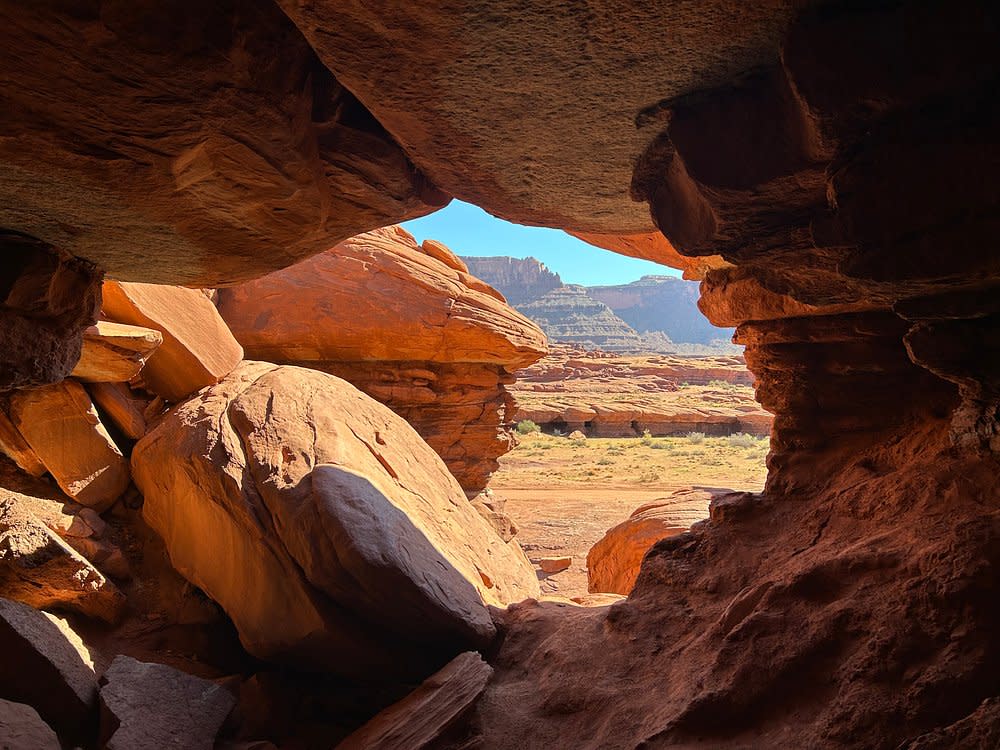
Moab Wind Caves, Catacomb Rock
Tucked along the Chicken Corners Trail, the Moab Wind Caves at Catacomb Rock are a hidden maze of wind-carved sandstone chambers that feel like an otherworldly labyrinth. Getting there is half the fun, with an off-road drive along Kane Creek Boulevard and Hurrah Pass that requires a high-clearance 4WD vehicle. Once you arrive, exploring is surprisingly easy — more than a dozen spacious caverns are connected through cool, shaded passageways, with no ropes or technical gear required. Open year-round in good weather and free to visit, these Moab caves will have you channeling your inner Indiana Jones as you wander, climb, and marvel at the incredible sandstone formations.
Challenging Cave Hike Near Moab
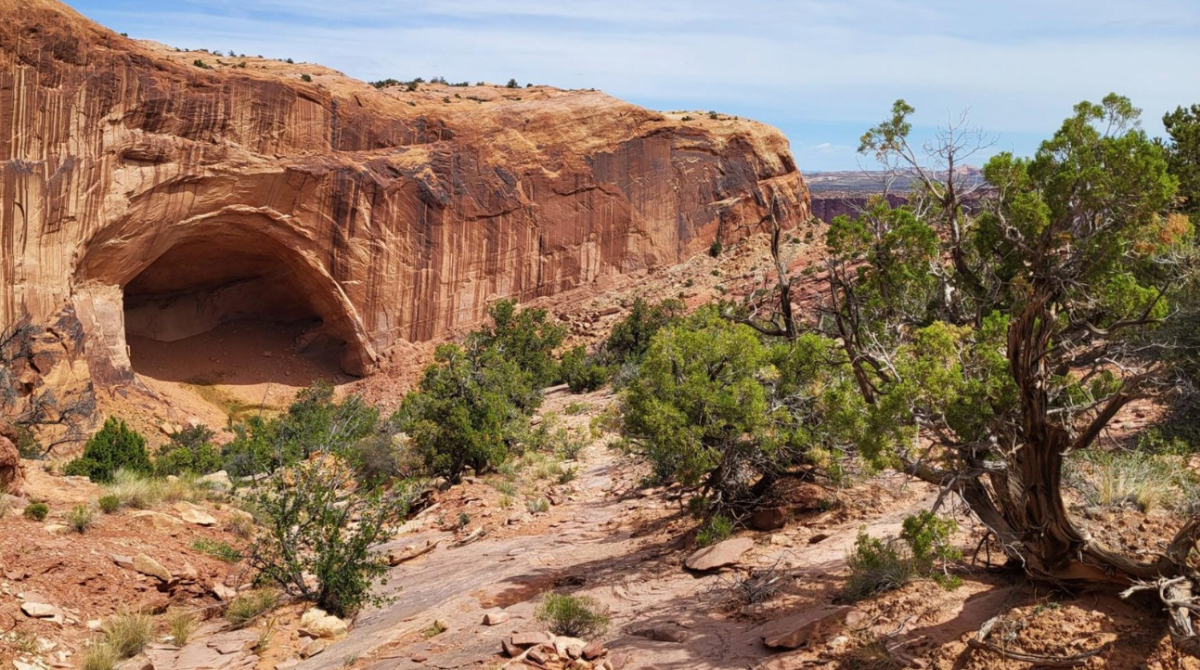
For adventurous hikers looking to go beyond the usual trails, this cave experience is worth the extra effort. However, reaching it requires careful planning, solid navigation skills, and a full day of exploration, making it best suited for experienced spelunkers.
Alcove Spring Trail, Canyonlands
Recommended for expert hikers only! If you’re up for a true backcountry adventure, Alcove Spring Trail is one of the most rewarding cave hikes in the Moab area. Starting from the Upheaval Dome Trailhead in the Island in the Sky district of Canyonlands National Park, the route descends roughly 11.5 miles and 1,300 feet before following a dry, sandy wash to a secluded alcove sheltering a natural spring. Plan on spending the full day (at least 6–7 hours) on this strenuous hike, and consider visiting in the spring or fall, when cooler temperatures make the exposed terrain far more comfortable than the summer heat. Bring an offline map, plenty of water (one liter per person, per hour), snacks, sturdy footwear, and a headlamp. A Canyonlands National Park entrance fee is required.
Tips for Exploring Caves Near Moab
Whether you’re making a quick stop or heading deep into the backcountry, a little preparation goes a long way when exploring Moab’s caves.
- Pack a headlamp or flashlight. Even caves and alcoves that seem well lit at the entrance can become surprisingly dark just a short distance inside.
- Dress for fluctuating temps. Desert caves are often much cooler than the surrounding landscape, especially during the heat of summer, so bring an extra layer.
- Download offline maps. Cell service is limited or nonexistent at most of the destinations in this guide, so having maps available offline can make navigation much easier and safer. Always tell someone where you’re going, too.
- Carry more water than you think you’ll need. The desert climate is dry year-round, and backcountry routes—especially those requiring high-clearance 4WD vehicles or long hikes—offer limited access to assistance if something goes wrong.
- Leave No Trace. Many caves throughout Utah contain protected cultural resources. Never touch, move, or remove artifacts, and avoid touching petroglyphs to help preserve them for future generations.